Costs: €150 ex. tax (incl. tax €181.50).
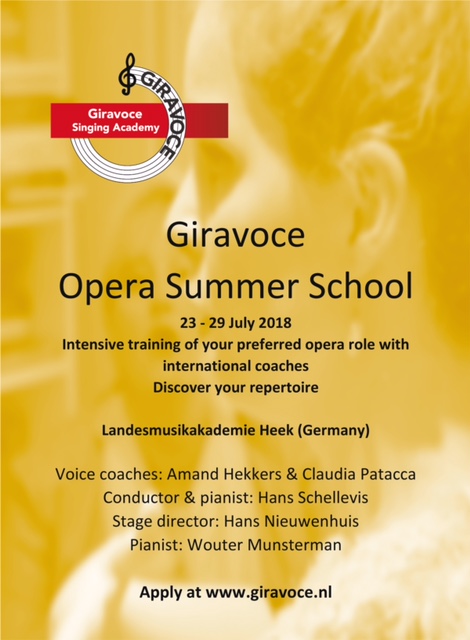
Giravoce Opera Summer School organised an intensive role-training course from 23–29 July 2018 at the Landesmusikakademie in Heek, Germany. The Landesmusikakademie provided excellent facilities for an intensive opera programme, working with internationally renowned and experienced singing teachers, a stage director, conductor and pianists.
Hans Nieuwenhuis: stage director
Amand Hekkers (tenor) & Claudia Patacca (soprano): professors of voice
Hans Schellevis: conductor, pianist and bel canto specialist
Wouter Munsterman: pianist
The course fee of €900 included all lessons and coaching, classes and performances, accommodation for six nights, breakfast, lunch and dinner (based on a double room for two students; a single room carried a €90 supplement for the six nights). The school closed with a concert on July 29th.
Soprano Claudia Patacca was profiled by broadcaster RTV Oost for the programme “OverUIT de Kunst”, aired 24 September 2017. Claudia studied cum laude at the conservatory in Enschede before continuing at the International Opera Center Amsterdam, and made her operatic debut at the Concertgebouw in Amsterdam.
Claudia is head vocal teacher at the ArtEZ Conservatorium and gives masterclasses both in the Netherlands and abroad. One of her students, soprano Irene Hoogveld, completed her Bachelor’s degree cum laude under Claudia in June 2017 and was selected for the Master of Voice programme at the Guildhall School of Music and Drama in London.
Ede, 7 April 2016 — by Jordi Kooiman, for Opera Magazine. Translated from the Dutch original.
Soprano Claudia Patacca and tenor Amand Hekkers share a deep fascination with the voice. For years they have been passing that passion on to a new generation of opera singers. Now they are joining forces. With their new opera studio Giravoce, they want to help young singers find their way into the profession. “For us, it’s about the whole package.”
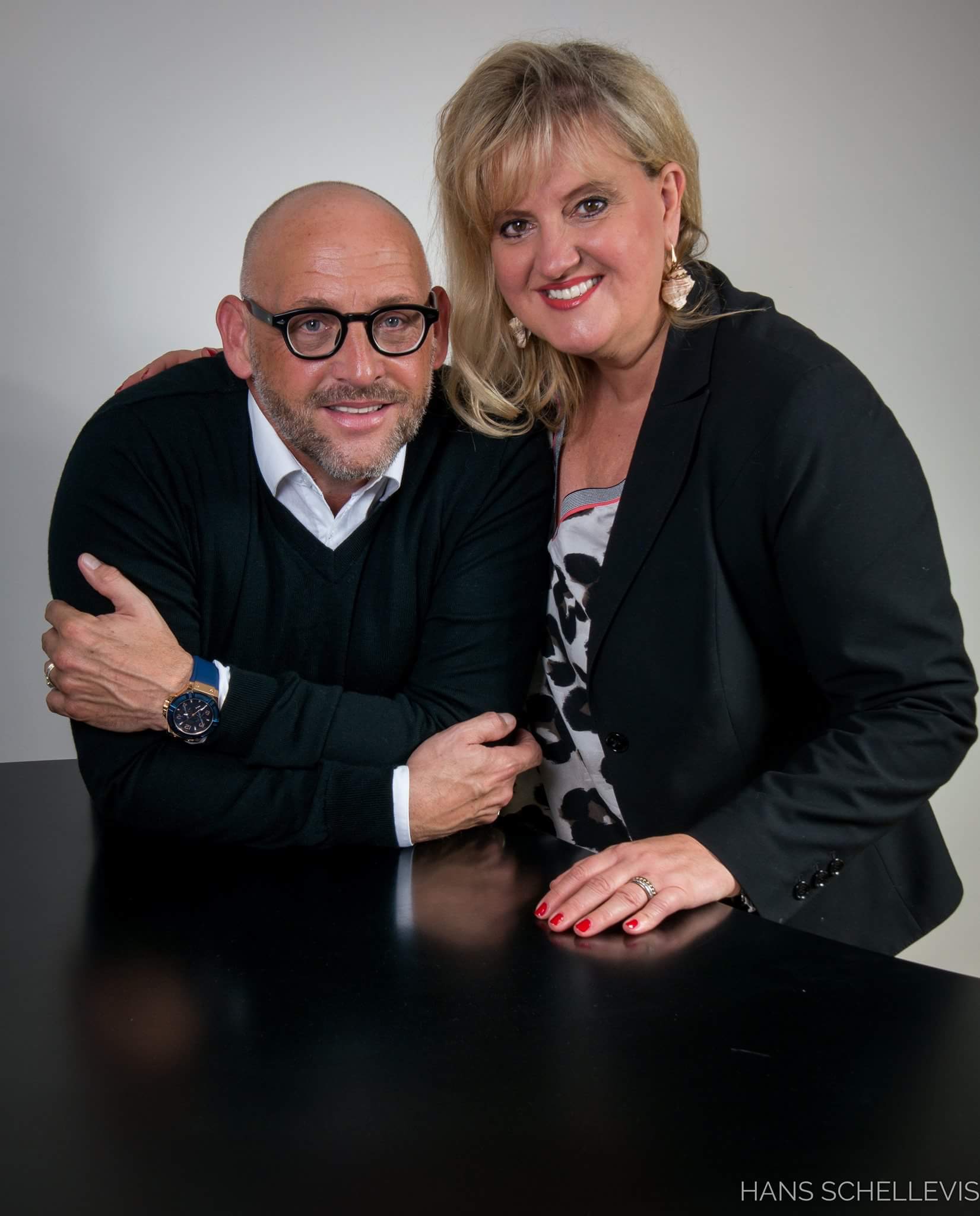
The first time Claudia and Amand met was during a production of Hänsel und Gretel with Opera SKON in 1993, Amand recalls. Claudia, fresh out of her studies, sang the role of Gretel; Amand’s husband, Hans Schellevis, accompanied on piano.
A few years later their paths crossed again. Claudia was by then part of the International Opera Studio in Amsterdam, where Schellevis was also active as a pianist. “Since then we’ve always stayed friends and followed each other’s careers,” Amand says.
After his vocal studies in The Hague, Amand built an international career as a tenor, singing opera, oratorio and lieder, while also giving a great deal of his time to teaching. Four years ago he decided to dedicate himself entirely to teaching, wanting to give his students all his time and attention. “That was a personal choice,” he says. “Although the itch to perform is starting to come back. Fortunately I still sing plenty — during my lessons, I sing everything for my students myself.”
Amand is a principal singing teacher at the Royal Conservatoire of Scotland in Glasgow, where he coaches tenors exclusively. He is also a guest teacher at the Royal Danish Academy of Music in Copenhagen and regularly gives masterclasses elsewhere — he will soon be teaching in Naples. “I get to teach at one of the oldest conservatories there. Me, the token Dutchman…”
Claudia Patacca has worked internationally as a soprano since the 1990s. She still keeps a full singing schedule, but combines it with a position as principal singing teacher at the ArtEZ Conservatoire. She, too, travels abroad regularly to give masterclasses — recently in Barcelona, Riga and Tallinn, and in early May she heads to Malmö.
“It’s sometimes a search for the right balance,” she says. “I notice that teaching takes a huge amount of energy. I’m not exactly a mother figure to my students, but I am very involved. At the same time, I still love singing myself, very much.”
Claudia and Amand had long been mulling over the idea of founding an opera studio. The immediate trigger was their shared experience that so little is organised for young singers over the summer. From that grew the idea of a week-long summer course in which young singers would be intensively coached in every aspect of the opera profession.
“The idea itself isn’t new,” says Amand. “But 99 percent of this kind of initiative takes place in France and Italy. In the Netherlands there’s almost nothing. That’s why we want to get this off the ground.”
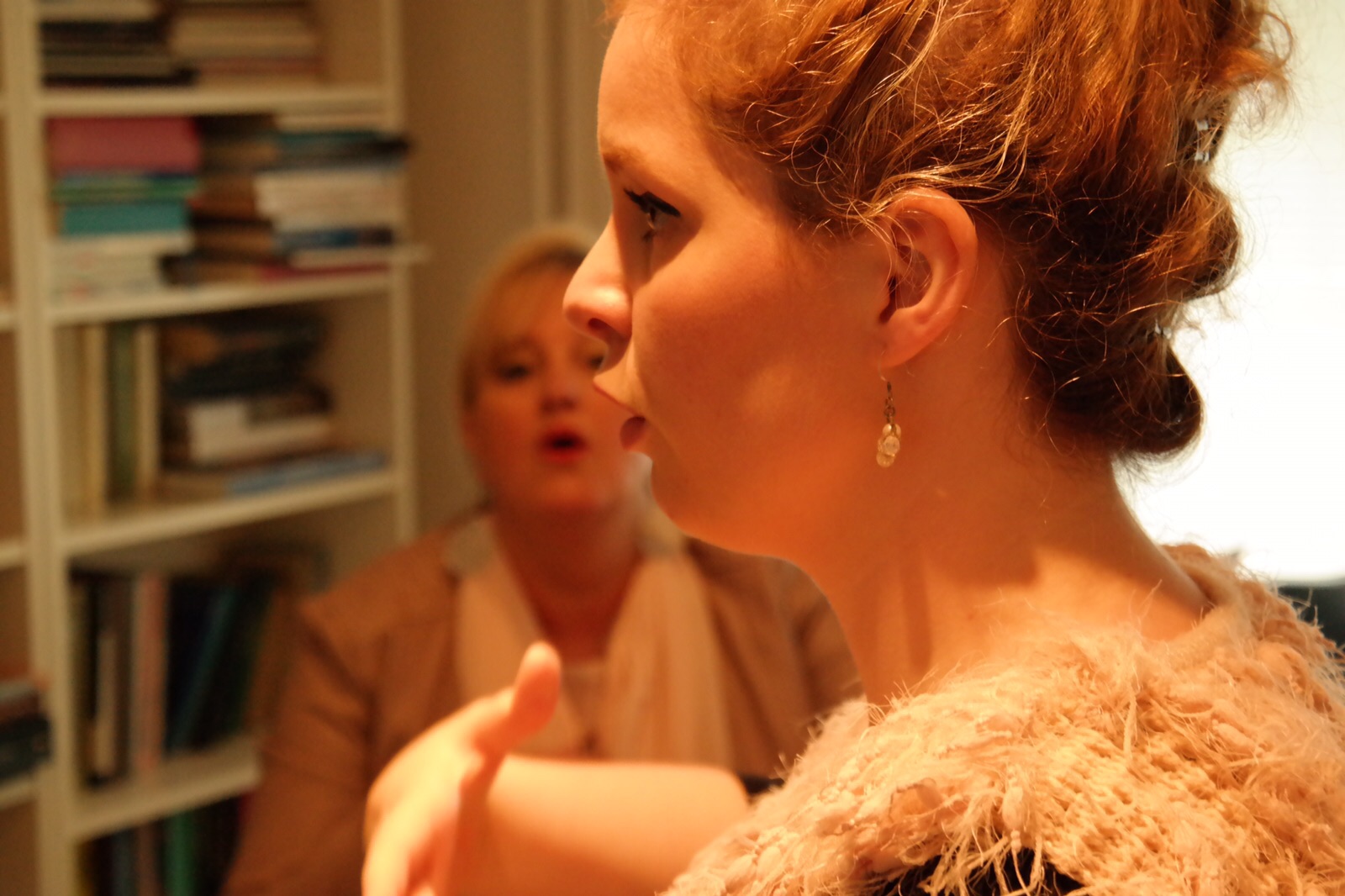
Claudia and Amand felt an opera studio was the best form for their plan, especially since, longer term, they don’t want to limit their work to a single week in summer. They want to organise training weeks several times a year, surrounded by masterclasses and coaching throughout the year — the way a real studio should work.
On Sunday 24 April, from 10.00 to 17.00, Claudia and Amand gave a preview of their work with a masterclass for tenors and sopranos at Akoesticum in Ede, titled ‘No C too high’. “With the masterclass we wanted to put ourselves on the map and see how the initiative would be received,” says Amand. Spectators were warmly welcomed.
Later that year, from 21 to 26 August, the first opera studio week took place, also at Akoesticum, with room for ten to fifteen participants — singers who had just graduated or were nearing the end of their studies, receiving lessons two to three times a day. For Claudia and Amand it was about “the whole package”, they explain: How do you audition? What repertoire do you sing? How do you present yourself? How do you build a CV?
In concrete terms, participants worked on a role from the Italian repertoire, with help from, among others, an Italian-language coach and, where possible, an acting coach and a breathing therapist. Claudia and Amand also wanted to bring in young repetiteurs. “There’s no training for repetiteurs in the Netherlands, even though it’s really a discipline of its own. We’d like to help pianists learn how to play for singers — and how to catch mistakes.”
Claudia and Amand named their studio Giravoce. “Literally it means ‘voice that goes around’,” says Claudia. “‘Gira’ means to turn,” Amand adds. “When you sing, you let your breath and your voice spin round, like a little wheel. With the name Giravoce we want to say that, for us, everything revolves around the voice.”
That’s no overstatement. Talking to the two of them, their deep fascination with — and respect for — the individuality and vulnerability of voices is unmistakable. “Every student is a unique person with a unique voice,” says Claudia. “So teaching is always tailor-made. That’s also what makes it so beautiful. With one singer you’ll work on diction, with another on dynamics, and with yet another on interpretation.”
Claudia and Amand don’t pretend that in the short span of a masterclass or a coaching week they can change a young singer’s life. “In a few days you can’t really lift someone to a higher level — or, the other way round, ruin them,” says Claudia. “But you can plant a seed. Contribute a small stone.”
“We’re also not going to overhaul a student’s entire vocal technique,” Amand continues. “I always tell my students: feel free to run everything I say past your own teacher too. The voice is such a vulnerable thing.”
Just how different every voice is becomes clear to Amand in Glasgow. The Royal Conservatoire has a tradition where teachers only teach their own voice type, so when he started there in 2012, Amand began with twelve tenors in his class. “But every one of them had their own sound and their own problem. Some struggle to get through the passaggio into the top of the range. Others need more width. That’s what makes it such an interesting profession.”
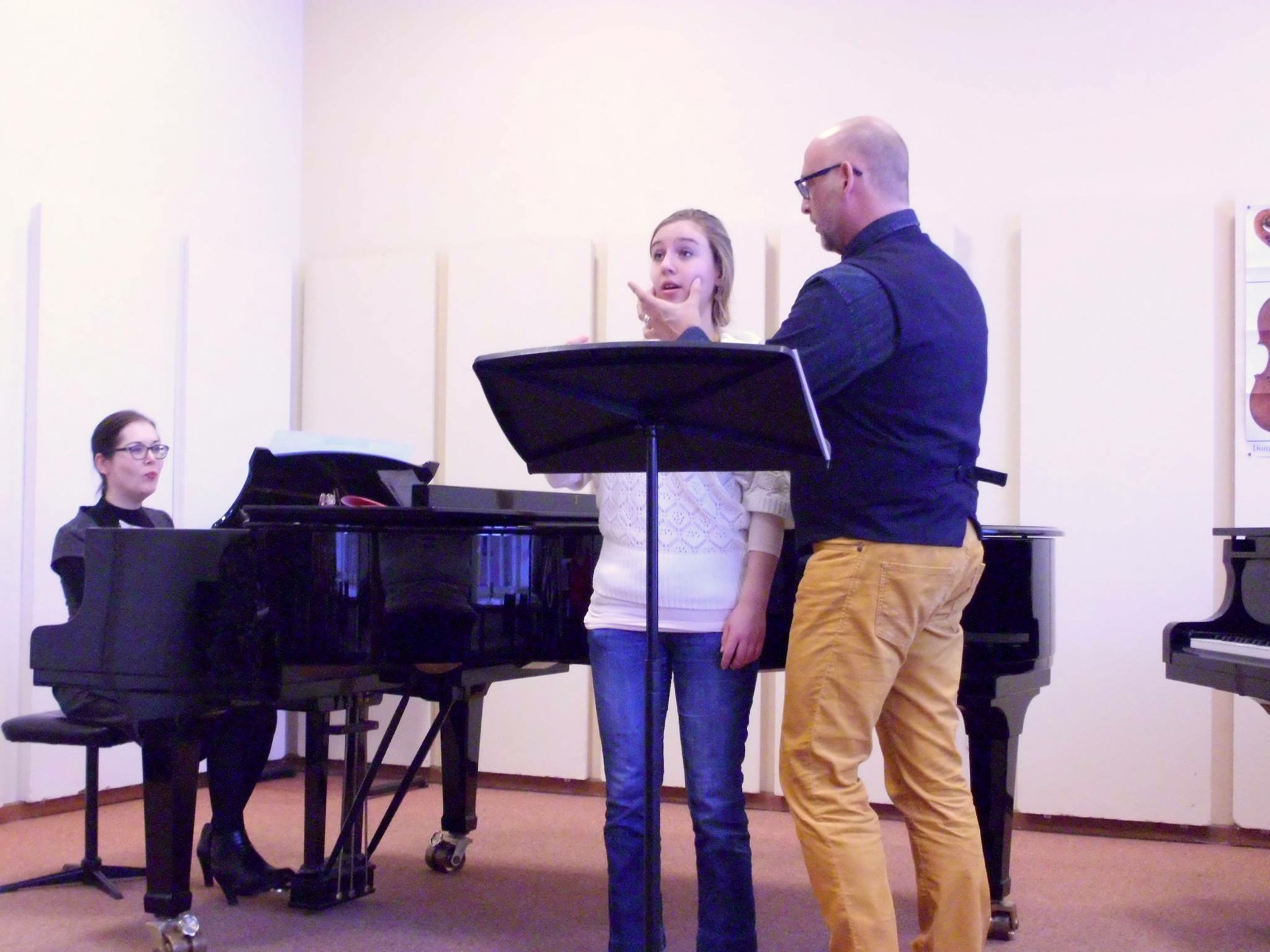
Amand realises he can only guide his tenors through part of their development. “You bring your students up to a certain level. If they then get the chance to study further, say, at the Royal Academy in London — as two of my students recently did — then I say: please, go for it!” Claudia agrees: “As a teacher, you can’t claim ownership of singers.”
“Also don’t forget that a tenor is only at his very best around the age of 40,” Amand continues. “In our world, a lot of tenors burn themselves out because they want to sing too much, too soon. And they all want to sound like Jonas Kaufmann. But if you have good coloratura and can sing Rossini well, you can make very good money doing that too.”
“Knowing what you can’t do is very important,” Claudia agrees. “Not everyone can, or has to, stand on the big stage. Your task as a teacher is to recognise that, and to guide your students by the hand.”
Claudia and Amand call themselves “very involved teachers”. At the same time, they know the limits of their profession. “You train singers, you can’t promise them a career,” says Amand. “You can never predict how things will go for a singer. Some graduate with top marks, only to wilt away behind a till afterwards. Others leave the conservatoire, feel the pressure lift, and suddenly blossom. A lot of it has to do with pressure and freedom.”
Claudia’s voice type — soprano — is probably the most unpredictable of all, simply because there are so many sopranos. “So I always tell them they’ll have to work extremely hard if they want to make it,” says Claudia. “Talent alone isn’t enough. A good voice is perhaps 50 percent of the work. After that you have to persevere, put in the hours, and sometimes fall flat on your face. The ones who get back up afterwards are the ones who go far. And beyond that, you simply need luck too — or you need to cultivate it…”
Words by Jordi Kooiman. Originally published in Opera Magazine, 7 April 2016. Translated from the Dutch original.
We are proud to announce that our masterclass “No C too high”, held Sunday 24 April 2016, was a big success. We worked all day with three sopranos and two tenors at Akoesticum in Ede, Holland.
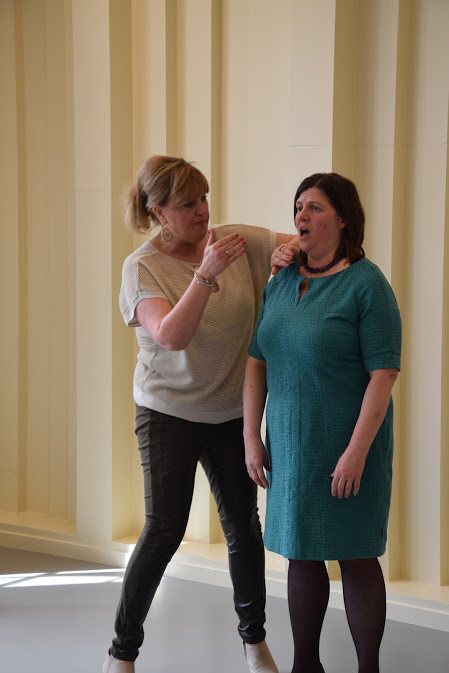
Amand Hekkers gives masterclasses in:
Copenhagen — November 2015, The Royal Conservatoire of Copenhagen, Denmark
Naples — June 2016, Conservatorio San Pietro a Majella, Italy
France — 11–12 August 2016, Orfeo Foundation
Claudia Patacca gives masterclasses in:
Riga — 27–29 January 2016, Jāzeps Vītols Latvian Academy of Music
Tallinn — 25–27 February 2016, Estonian Academy of Music and Theatre
Malmö — 2–4 May 2016, Malmö Academy of Music, Sweden